Transporting Monomers and Acrylates Correctly: Styrene Monomer, Butyl Acrylate, VAM and MMA
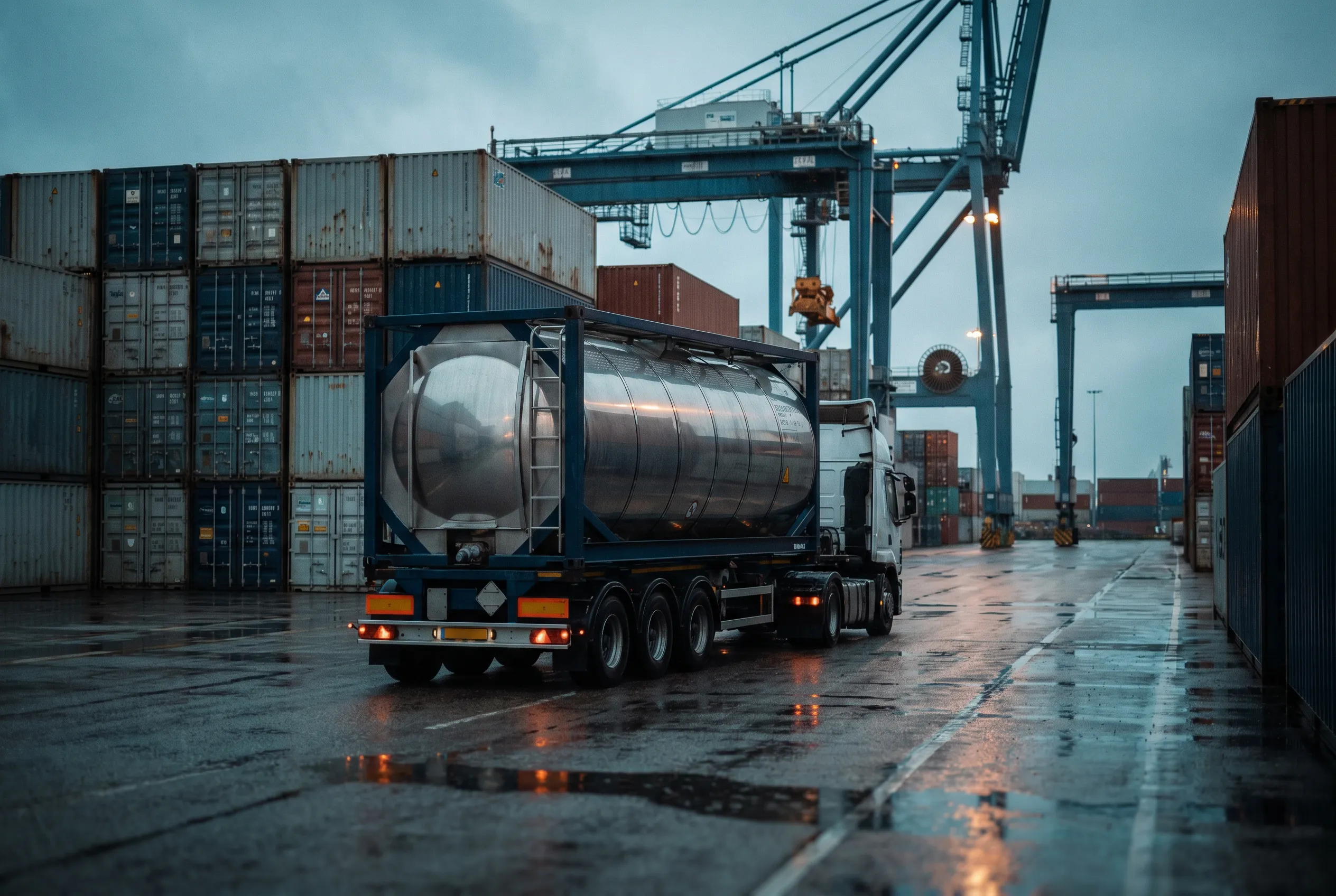
In chemical procurement, the trilogy of “right product + right specification + right logistics” keeps your production running without interruption. With flammable monomers and acrylates, even small operational errors can lead to costly consequences such as polymerisation, odour complaints or contamination. Below we summarise the technical points buyers need to know about Styrene Monomer, Butyl Acrylate, Vinyl Acetate Monomer (VAM) and Methyl Methacrylate (MMA), and how these risks should be managed in the field.
Styrene Monomer: How We Manage Polymerisation Risk
What is it used for? The primary feedstock for PS, ABS and copolymer production; widely used in automotive, white goods, packaging and insulation sectors.
Key properties:
- Flammable liquid (ADR Class 3)
- Aromatic odour; vapours are heavier than air
- Shipped in stabilised form with TBC inhibitor; trace O₂ is required for effectiveness
Buyer risks:
- Polymerisation → viscosity increase, gel formation, filter blockage
- Catalytic contamination (iron/residue) → colour/odour/viscosity deviation
- Temperature/storage dwell → quality deterioration and return risk
Critical logistics controls:
SS tanker and closed loading/unloading; compliance with temperature window (typically 15–25 °C), parking in shade; inerting aligned to inhibitor–O₂ balance; in-line sampling and seal integrity tests.
Buyer benefit: On-spec arrival, reduction of polymerisation-related losses and production downtime.
Butyl Acrylate: Odour and Quality Control
What is it used for? Acrylic emulsions, adhesives, paints and coatings; flexibility and adhesion properties are required.
Key properties:
- Flammable; sharp odour (sensitive to complaints)
- Stabilised with MEHQ or phenothiazine
- Sensitive to metal ions; material compatibility is important
Buyer risks:
- Odour/emissions → site complaints, environmental non-compliance
- Polymerisation and metal contact → quality degradation
- Wrong gasket/hose → micro-leaks
Critical logistics controls:
Closed system + VRU (vapour return unit); PTFE gaskets, composite/SS hose; flow rate/foaming control; temperature discipline (typically < 25 °C).
Buyer benefit: Significant reduction in odour complaints, stable product quality and audit-ready documentation.
VAM (Vinyl Acetate Monomer) – Closed System & VRU Mandatory
What is it used for? PVA/PVAc, emulsion polymers, adhesives and the paint industry.
Key properties:
- Flammable; sharp, acidic odour
- Stabilised with MEHQ; moisture/hydration risk
Buyer risks:
- Odour/emissions and community complaints
- Contamination from incompatible metal/gaskets
- Moisture/condensate → reaction and quality deviation
Critical logistics controls:
Fully closed system, active VRU, breather/over-pressure control; avoid copper/bronze; SS + PTFE contact surfaces; line purging and condensate prevention.
Buyer benefit: Emission control, reduced contamination risk and process repeatability.
MMA (Methyl Methacrylate) – Temperature Discipline Against Exothermic Risk
What is it used for? PMMA (acrylic glass), cast resins, coatings; optical clarity and mechanical strength.
Key properties:
- Flammable; characteristic odour
- Stabilised with MEHQ/Topanol-A; exothermic polymerisation tendency
Buyer risks:
- Temperature and vibration-induced polymerisation
- UV/heat → colour/viscosity deviation
Critical logistics controls:
Stable temperature range (typically 15–25 °C), morning/evening operating window; vibration management through route/speed planning; maintaining inhibitor–O₂ balance in inerting procedure.
Buyer benefit: No surprises in the recipe; consistent viscosity and stable process parameters.
Risk–Control Matrix
| Product | Primary Risk | Critical Control |
|---|---|---|
| Styrene Monomer | Polymerisation, catalytic contamination | TBC + partial O₂, heat control, SS line & closed system |
| Butyl Acrylate | Odour, polymerisation, leakage | Closed system + VRU, PTFE gasket, foaming/flow control |
| VAM | Emissions, contamination, condensate | Fully closed line, VRU, SS+PTFE, purge & breather control |
| MMA | Exothermic polymerisation, UV/heat | Temperature range, route/speed (vibration), inhibitor–O₂ balance |
Quick Buyer Checklist (Before Purchase)
- Has the SDS and inhibitor type/ppm been confirmed?
- Is the required temperature window and dwell scenario defined?
- Is the closed system/VRU requirement and connection type (camlock/dry-break) clear?
- Have previous product compatibility and cleaning records been requested?
- Are the sample/viscosity/odour criteria required on arrival documented?
Why Sima Lojistik?
- Quality preservation focus: We proactively manage polymerisation and odour risks in our operational design.
- Transparent reporting: Loading-to-arrival temperature charts, sample chain, equipment checklist and photo report.
- Field discipline: SS tanker, PTFE gaskets, antistatic composite hose, closed loading/unloading, active VRU.
- Audit-ready package: ADR/TMGD compliance documents; CAPA (corrective/preventive action) records.
- Proof by pilot: We run a two-shipment pilot, tracking and calibrating KPIs together.
Frequently Asked Questions
Why does trace O₂ matter for the inhibitor? Inhibitors such as TBC/MEHQ are effective in the presence of oxygen; completely oxygen-free inerting can increase polymerisation risk.
How do you reduce odour complaints? We control emissions with a closed system + VRU, correct gaskets/hoses and a low-flow start.
How do you prevent contamination? With SS tanker standards, previous product compatibility forms, cleaning records and a first-flow sample.